These are areas of active planning, development or experimentation, not a list of features already released. Work will be introduced in stages as game rules, assets, security and gameplay are verified. Existing gameplay remains the foundation, and optional depth should never be required to enjoy the core strategy game.
A Living Galaxy of cultures and history
Make the galaxy feel inhabited through discoverable system, planet, tile and item histories; distinctive civilizations, factions, customs, political traditions and alien technologies; and short stories linked to real places and discoveries. Proposed lore will be reviewed before it becomes established game canon.
Exploration encounters and a solo narrative
Add exploration events, mysteries, discoveries, ruins, artifacts, NPCs and interconnected storylines whose consequences develop over time. A continuously playable single-player story should remain engaging even when no other players are online, while cooperative faction play stays available.
Optional planetary surface and city maps
Open a world surface grid appropriate to each planet type, establish cities and manually place buildings within city plots. Layout, adjacency and local management may unlock optional benefits. All existing construction and colony functions must remain playable without entering the city layer, and unplaced buildings keep their normal production.
City planning, infrastructure and upgrades
Expand colony management with city districts, infrastructure, research facilities, housing, services, industrial specializations, new building types and upgrades that interact with existing resources and technologies. Site constraints, actual building instances and the existing tile limits remain authoritative; this layer must not create extra free buildings or bypass costs.
Society, government and policy choices
Develop colony and faction societies with meaningful administrative options, laws, social conditions, government policies, diplomacy, trade and cultural differences. Optional choices can influence local prosperity, services, political relationships and story events without replacing the familiar strategic game.
Living news from colony to universe
Introduce a news area alongside the existing navigation with personal, colony, faction, system, galaxy and universe reports. Articles, rumors and discoveries will come from actual game events and character knowledge, with fog-of-war and permissions respected so secret information stays private.
Timed events with meaningful consequences
Branching incidents, negotiations, crises, research opportunities and special missions may offer time-sensitive decisions, follow-up events and long-term repercussions. Deadlines, safe defaults for offline players and recoverable outcomes must be handled by the server; optional participation should never block ordinary play.
Optional skill challenges and minigames
Add varied short, accessible challenges for activities such as exploration, investigation, engineering or civic projects. Players who enjoy interactive activities can earn bounded optional clues or secondary benefits, while anyone can skip them and continue the full existing game without a penalty.
Ship Designer, shipyards and deeper customization
Continue expanding named ship blueprints, class-specific imagery and part catalogs for hulls, weapons, systems and other components. The Ship Designer creates reusable configurations; actual Shipyard production builds from saved designs, with the normal requirements for ownership, resources, crew, capacity and construction.
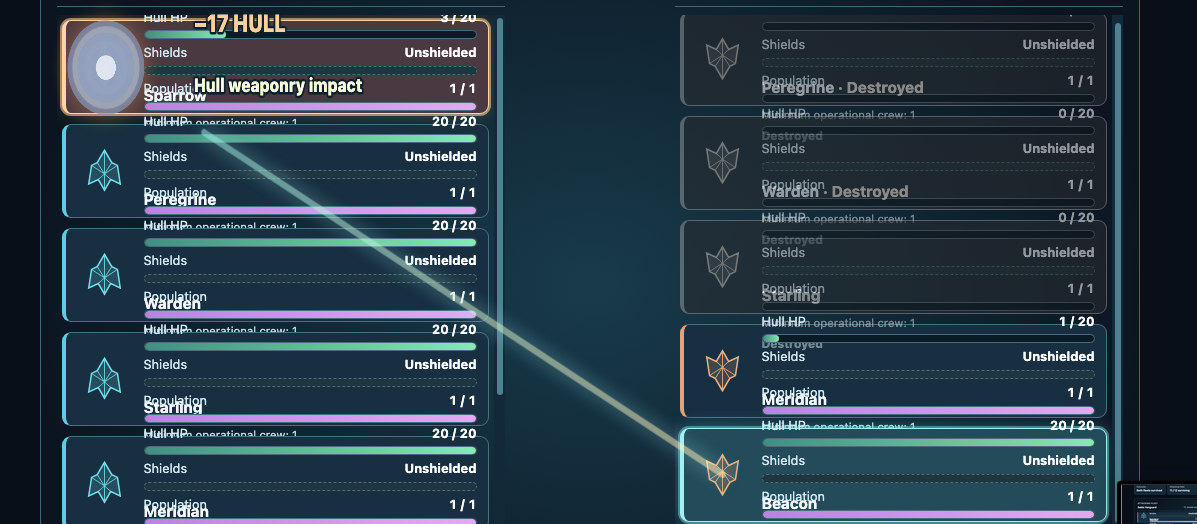
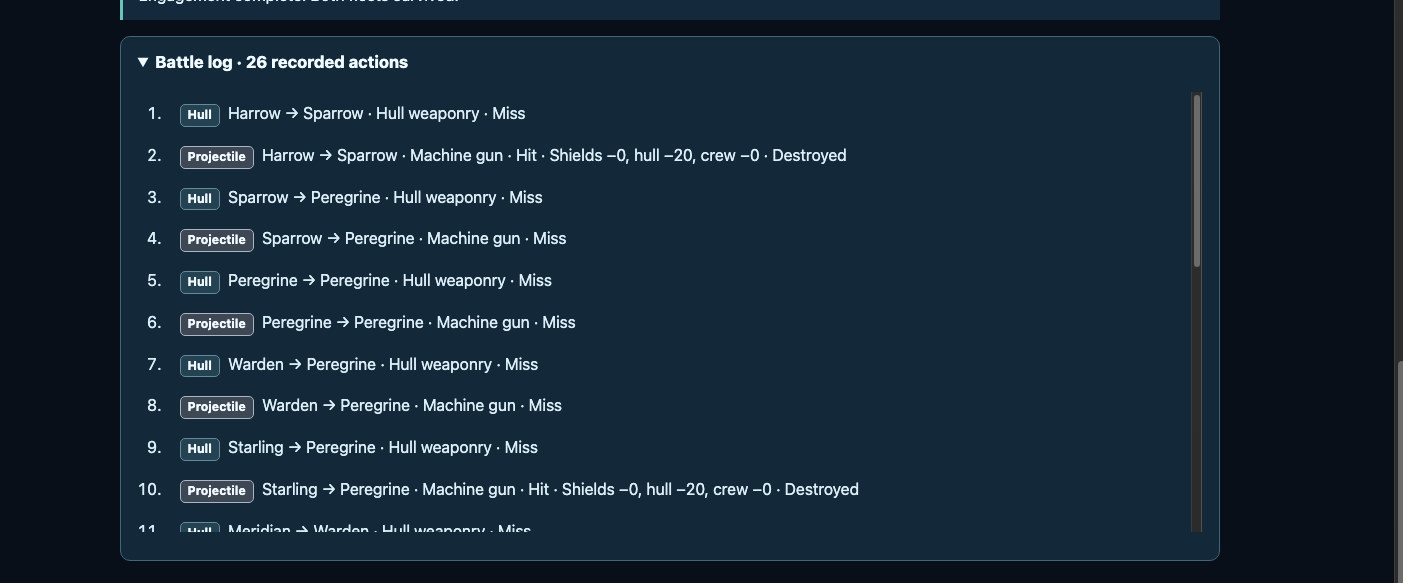
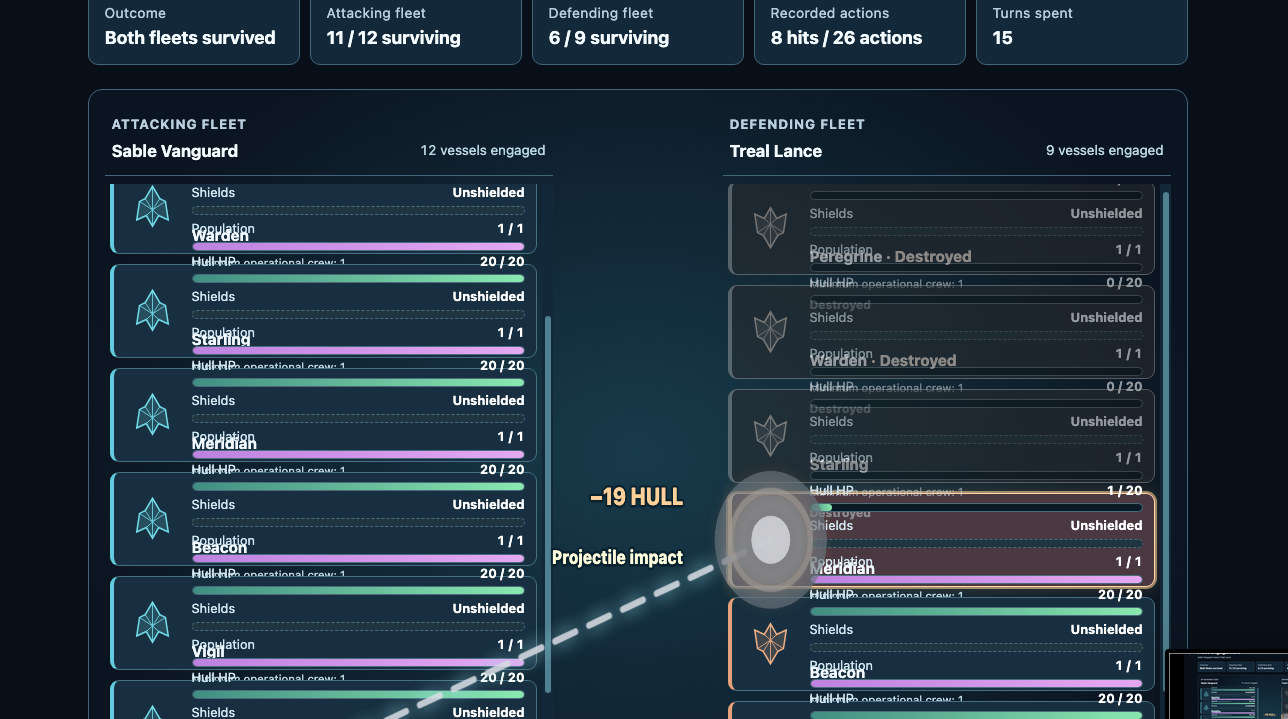
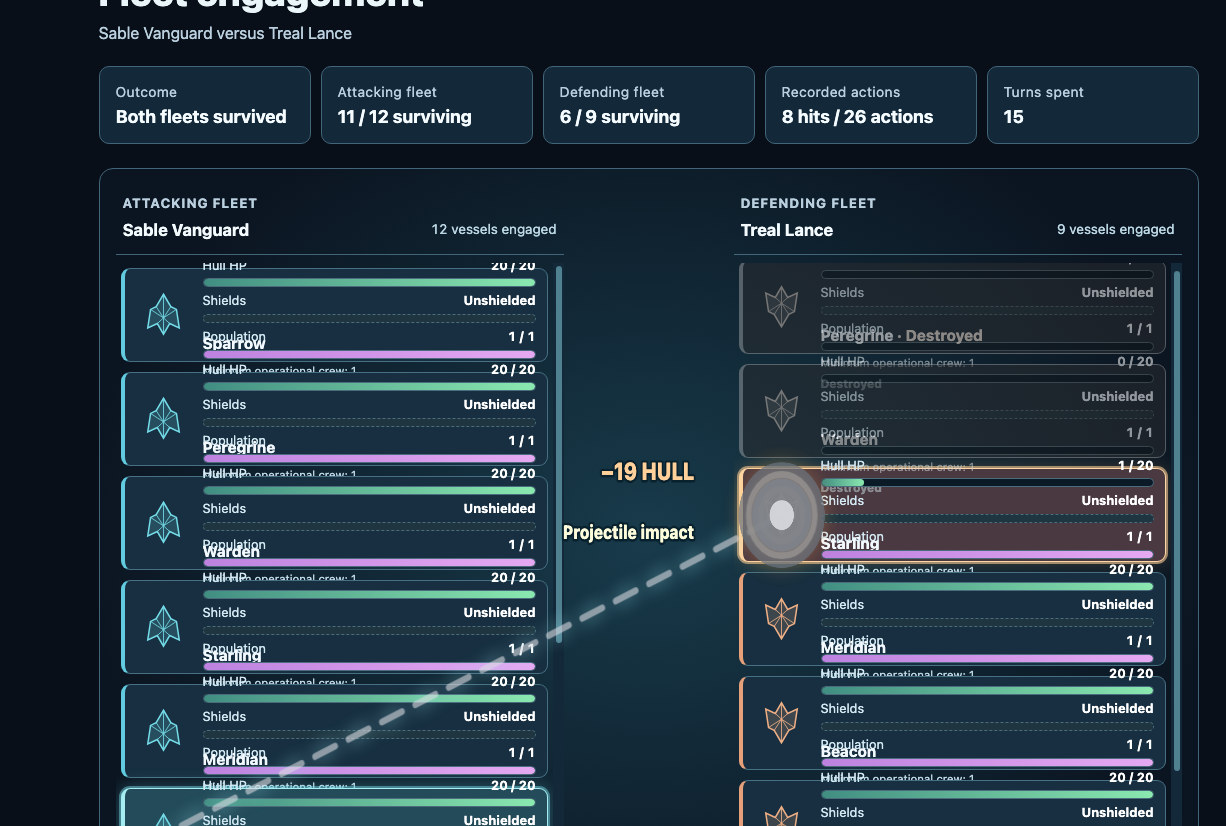
Fleet battle presentation and replays
Turn battle reports into watchable encounters with opposing ship formations, attacks synchronized with the combat log, weapon-type effects, shield interception and penetration, and live bars or indications for hull integrity, crew, population and other damageable systems. Replays preserve the authoritative battle result.
Experimental detailed fleet combat
In a separate experimental branch, explore positional fleet movement, speeds, formations, fighter attacks against capital ships, interception and changing tactical positions. This deeper visual simulation is a proposed development effort, not a replacement for the current live combat rules.
Richer galactic maps and command interfaces
Extend clickable galaxy, system and regional maps with clear exploration status, permission-aware tile information, faction and fleet presence, context panels and responsive mobile controls. Improve the holographic Command Center, shipyard workstations, loading transitions and optional action animations without hiding existing actions.
Expanded progression and achievements
Build out meaningful profile badges and associated approved gameplay benefits, cosmetic identity, character portraits, faction achievements and progression goals. Badge details, unlock requirements and effects should be explained in profile tooltips, Help and the tutorial, with fairness checks before new rewards are enabled.
Diplomacy, factions and shared projects
Deepen cooperation between players, faction government, defensive construction, alliances, trade, territorial policies, joint technology and major system projects. Planned systems should support both competitive fleet strategy and practical progress for smaller or less-active factions.
Exploration technology and new construction
Broaden research, planetary exploration, resource collection, mining, ship component manufacturing, defenses, special facilities and alien-tech applications. Each addition should have real costs, prerequisites, effects and clear in-game Help rather than appearing as an unexplained menu item.
Guided onboarding, Help and accessibility
Continue the first-time tutorial and page-specific Help across maps, building, ship management, profiles, badges, NFTs and wallet controls. Keep clear text, mobile-friendly pages, accessible input alternatives, readable dark interfaces and the option to disable distracting effects.
Presentation, reliability and game continuity
Improve the speed of galaxy and planetary maps using reusable cached backgrounds and secure current overlays, continue reliable save/load and game-turn processing, and protect existing player assets while systems evolve. New layers and designs should not interrupt the original day-to-day game.